
Introduction
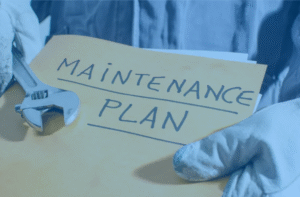
Budgeting for major maintenance projects is one of the most important executive functions of the trustees. Trustees attempt to keep levies low, but this should never be at the expense of saving for future maintenance projects.
The annual approved budget
An important aspect of sound financial management is the preparation of a budget which comprises an estimate of income required to meet the expenses of the scheme for the next year. The income will be made up of primarily the levy contributions that are collected from the members of the body corporate.
The body corporate need to list all anticipated expenses when compiling the budget. Expenses would include items such as rates and taxes, electricity, insurance, management fees and security costs.
One of the compulsory agenda items at every AGM of the body corporate is the approval of the budgets for the administrative and reserve funds for the scheme for the next financial year. In terms of PMR 26(1)(e) a body corporate must prepare budgets for the administrative and reserve funds. The budgets must comprise itemised estimates of the anticipated income and expenses during the next financial year for presentation at the annual general meeting (“AGM”). These budgets may include discounts not exceeding ten per cent (10%) of a members’ annual contributions applicable if all those contributions are paid on or before the due dates.
Maintenance of common property
The owners of all sections in the scheme jointly own all the common property in undivided shares proportionate to their participation quotas. Common property includes the land and all the outer portions (outer part from median line of the floors, walls and ceilings) of the building including the basement and foundations; the attic and roof; passages; stairwells and elevators; communal utility rooms such as foyers, storerooms and laundromats; gardens, patios and balconies; recreational amenities such as club houses, tennis courts and swimming pools; scheme boundary walls; entrance gates and driveways; parking bays and garages that are not shown as sections on the sectional plan.
Section 3(1)(l) of the STSM Act requires that the body corporate must maintain all the common property and to keep it in a state of good and serviceable repair. The cost of maintaining common property forms part of the annual budget set by the body corporate. The trustees may make decisions that concern the day-to-day administration of the body corporate, including maintenance of common property that falls within the trustees’ expenditure limit.
Trustee spending can be limited by ordinary resolution of the body corporate in terms of section 7(1) of the STSM Act. If the total cost of maintenance is above the trustee’s spending limit, the maintenance must be authorised at a general meeting by an ordinary resolution of the body corporate.
The trustees should obtain three independent quotes for any maintenance work to be done. This is good practice. Not only the cost should be considered but also the experience and reputation of the contractor involved.
Funding maintenance that has not been budgeted for
If the need for maintenance arises which has not been included in the annual budget, it may become necessary for the trustees to levy members with a special contribution if additional income is required to meet a necessary expense that cannot reasonably be delayed until provided for in the budget for the next financial year.
The trustees can raise a special contribution by passing a resolution to be levied on each owner to meet the additional cost in terms of PMR 21(3)(a). A “special contribution” means any contribution levied other than contributions which arise from the approval of the estimate of income and expenditure at an annual general meeting of a body corporate, determined to be a contribution to be levied upon the owners during the ensuing financial year.
Alternatively, the trustees could raise a loan to meet the cost of the unbudgeted maintenance project. PMR 21(2)(a) states that the body corporate must not make loans from body corporate funds without the authority of a unanimous resolution. Obtaining a unanimous resolution of the body corporate could be very difficult, if not near impossible.
Conclusion
In terms of section 3(1)(t) of the STSM Act the trustees are tasked with doing all things reasonably necessary for the control, management and administration of the common property in the interest and the benefit of the body corporate. This broad statutory function could include maximizing the scheme’s money in the bank, or reducing the or subsidizing the member’s levy responsibility.
Trustees must be careful to ensure that the scheme has sufficient funds to cover the operational costs and future maintenance project costs, such that the scheme remains attractive for investment therein as being financially stable. In order to ensure that the scheme’s infrastructure is adequately maintained and the owner’s investments are protected the trustees should stay on top of the collection of contributions for the administrative and reserve fund such that they avoid the necessity to collect special levies and borrowing money by way of loans.
WRITTEN BY DR CARRYN DURHAM